Supplier qualification starts before a purchase order is issued. A vendor may deliver on time while still introducing risks related to identity, contamination, allergens, incomplete documents, or lot-to-lot variation. Approval based only on price or one sample leaves the business exposed.
What does supplier qualification mean?
Qualification means gathering enough evidence to decide whether a source can consistently provide a conforming material or service. The depth of review should match risk. A critical ingredient, contract laboratory, or product-contact component calls for greater control than an office supply.
- Impact on safety, identity, purity, quality, or performance.
- Supply-chain complexity and country of origin.
- History of failures, complaints, rejections, or delays.
- Ability to provide reliable COAs, certificates, and traceability.
- Need for an audit, verification testing, or a quality agreement.
A step-by-step supplier qualification process
1. Define requirements before requesting a quote
The specification should address characteristics, test methods, acceptance criteria, packaging, labeling, shelf life, and transportation conditions. Agree on documents required with every lot and how the supplier will notify the customer about changes to process, source, formulation, or manufacturing location.
2. Review documentation and capability
A questionnaire may cover the quality system, document control, deviations, CAPA, calibration, sanitation, allergens, traceability, and business continuity. Responses must be evaluated. Collecting signed forms without investigating gaps or contradictions does not create reliable approval.
3. Verify with independent evidence
Depending on risk, request current certificates, review historical results, conduct an audit, or test samples and initial lots. A COA is useful information, but its reliability should be established. Testing frequency may change after the organization builds a sufficient, documented history.
4. Approve with clear conditions
The approved supplier list should identify authorized materials, assessed location, status, review date, and restrictions. Conditional approval may require enhanced testing or a limited number of lots while evidence is completed. Purchasing and receiving must use the same current list.
5. Monitor performance and requalify
Monitor on-time delivery, deviations, out-of-specification results, complaints, unreported changes, and CAPA response. An adverse trend can trigger investigation, increased controls, suspension, or alternate sourcing. Requalification may occur on a schedule and after significant changes or incidents.
Receiving turns the program into daily control
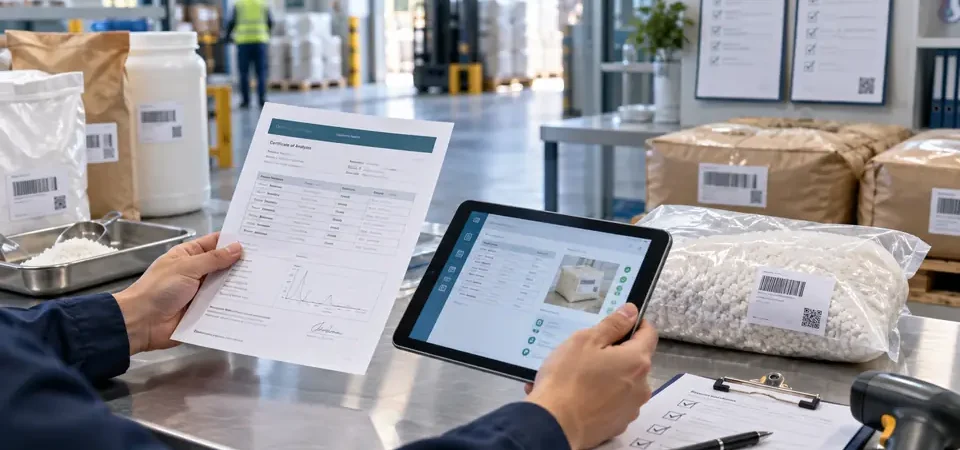
Approved suppliers still require receiving controls. Trained staff should verify identity, lot, condition, temperature when applicable, documentation, and purchase-order alignment. Material remains in quarantine until review, sampling, and approval or rejection are complete.
For covered food facilities, 21 CFR Part 117 Subpart G addresses supply-chain program requirements when a hazard is controlled before receipt. Applicability must be determined for each facility and material.
A documented decision, not a folder
An effective program connects specifications, risk, purchasing, receiving, testing, and performance. The organization can then explain why it trusts each supplier and what it will do when that confidence changes.
Need questionnaires, approval criteria, or supplier monitoring tools? Talk with Professional Aid Partners. We design controls proportionate to your risk and operation.